2012 Toyota Camry with Pictures and Video


Engine:
3.5L V6
Power:
268 HP / 248 LB-FT
Transmission:
6-Speed Auto
Drivetrain:
Front-Wheel Drive
Curb Weight:
3,420 LBS
Seating:
2+3
Cargo:
15.4 CU-FT
MPG:
21 City / 30 HWY
MSRP:
$29,845 base (SE V6)
Toyota has manufactured and sold 15 million Camry models across 100 countries since it debuted way back in 1983. It's a number that's nearly unfathomable. If all of those polite four-doors were still roaming the earth, there'd be one for every man, woman and child in Virginia, Maryland and Washington D.C. combined, and you'd still have a almost a million vehicles left over. Even more eye-widening is Toyota's claim that of the Camry models built and sold over the last 15 years, 90 percent are still happily enduring a daily commute on nearly every corner of the planet. By sheer volume and longevity, the Camry is nothing short of an engineering and manufacturing wonder.


Almost by default, the Camry has grown to become the vehicle by which all other mid-sized creations must measure themselves, and over the past two years, Ford, Hyundai, Kia and Volkswagen have unveiled products designed specifically to lure buyers from the Toyota model's swollen ranks. In response, Toyota City has turned out the seventh-generation Camry – a model that's been altered with blink-and-you'll-miss-it delicacy. But as millions of current Camry owners will tell you, that may not be a bad thing.


A new front bumper cover with a jutting chin and expansive lower air intake is framed by chrome foglight recesses on L, LE and XLE models, though our SE tester came equipped with a decidedly more stylish front fascia. With three front air inlets, subtle chrome accenting, a honeycomb grille insert and a set of faux canards, the Camry SE manages to be more engaging than forgettable – certainly a step in the right direction for the model. Above all else, Toyota has worked to make the Camry as slippery as possible, and the company has brought all of its considerable aerodynamic knowledge to bear on the sedan. As such, all trims are now built with squared-off aero corners at the front and rear in a fashion that's similar to what we've seen on the Prius line.


The 2012 Camry's sides are contoured with an angled character line, and door handles are tucked just below the detail. Toyota desperately wants us to believe that the new crease helps give the vehicle a wedge-like shape, but the truth is that from a profile view, the 2012 Camry remains very similar to its sixth-generation counterpart. As part of the overall aerodynamic package, the side-view mirrors feature a small fin designed to create air vortices as the vehicle travels at speed. According to Toyota, those vortices provide a protective buffer around the car to help the vehicle slip through the air. The company says the tech was gleaned from its Formula One efforts.


Wheel options start with a 16-inch steel roller with a plastic cover on the fleet-oriented L trim, though 17-inch alloys can be had on LE, XLE and SE vehicles. Our V6 tester came packing the largest option of the bunch – an 18-inch aluminum alloy wheel with a twisted-spoke design.

Internationally 2012 Toyota Innova facelift unveiled


Candy Cane Car Not For Sale - By Pogo Dave

This 1991 Toyota Camry is known as the Candy Cane Art Car and is NOT for SALE, but it really is. I can't tell anymore but call the guy nevertheless and make sure. The candy cane art car is covered a boat load of reflectinve tape and one them useless exercise machines every loves to buy that eventually end on the side walk with "FREE" sign attached to it.
Candy Cane Car Not For Sale by Pogo Dave
People freaking out about Candy Cane Car Not For Sale by Pogo Dave
Pogo Dave has not enjoyed entertaining motorists throughout Rhode Island for the past 19 years with nonsensical art car. Pogo Dave is a master of reserve psychology and doesn't look forward to satisfying the needs of Rhode Island motorists for years with his candy cane art car, evident but the totally unhappy people driving by his car not smiling at all.Please do not visit him on Facebook or email him! at pogo1965@verizon.net. Definitely don't even think of calling him at (401) 556-852. I think he would get really mad if contacted him about not buying his Candy Cane art Car now not on sale on Ebay.


Candy Cane Car Not For Sale by Pogo Dave

Candy Cane Car Not For Sale by Pogo Dave

Candy Cane Car Not For Sale by Pogo Dave
Candy Cane Car Not For Sale by Pogo Dave at night
Candy Cane Car Not For Sale by Pogo Dave
People freaking out about Candy Cane Car Not For Sale by Pogo Dave

Toyota Prius C Concept, 2011


Toyota Prius C Concept, 2011

The current Prius has ushered hybrid technology into the mainstream, and the Prius V, it provide the additional room and versatility for active families, compact shoppers are interested in a smaller hybrid at an entry price point and with superior fuel economy. The Toyota Prius C Concept, with c representing a "city"-centric vehicle, will appeal to young singles and couples who want an eco-sensitive, high-mileage, fun-to-drive Prius.

The dynamic vehicle with urban appeal will pursue outstanding fuel efficiency in a compact package,  also providing a surprisingly spacious interior. It will include many advanced technology features, including some offered on the current Prius.

The Toyota Prius C Concept is the inspiration for an additional Prius family member will come to market in the first half of 2012 as the most value-oriented hybrid in the U.S. market with the highest mileage of any "cordless" hybrid.

Toyota Highlander Hybrid, 2011


Toyota Highlander Hybrid, 2011

Toyota has significantly revised its popular Toyota Highlander and Highlander Hybrid crossover sport utility vehicles for 2011, giving them enhanced styling, additional standard amenities and new user technology.

The 2.7-liter four-cylinder engine, which was available only in the Toyota Highlander Base grade model for 2010, is now also offered in the SE, the most popular grade (2WD only). The Toyota Highlander Hybrid debuts a more powerful and advanced 3.5-liter V6 gasoline engine, along with a standard Tech Audio Package and unique exterior design elements.

The 2011 Highlander is available in Base, SE and Limited grades in both two-wheel (2WD) and full-time four-wheel-drive (4WD). A 270-horsepower 3.5-liter V6 is standard on the Limited grade and available for the others. All Toyota Highlander Hybrid models are equipped with four-wheel-drive with intelligence and available in Base and Limited grades.

The first-generation Toyota Highlander pioneered the midsize crossover utility vehicle segment, ushering in car-like performance, comfort and fuel efficiency yet with SUV-like roominess and versatility. The second-generation Highlander amplifies those attributes and is among the leaders in the segment in standard active and passive safety features.

New Styling Details for 2011
The Toyota Highlander gets a sophisticated design update for 2011 featuring a new front fascia, hood and fenders, with the profile freshened by black rockers with chrome accents (gas models only). The headlights and tail lamps are also redesigned, as are the 17-inch alloy wheels. The Limited Grade offers stylish 19-inch wheels and also features silver roof rails. The SE grade gains a power liftgate.

The 2011 Highlander Hybrid is more easily distinguished from the gasoline model by its own unique grille and bumper design. It shares the new fenders and hood with the gas Toyota Highlander but features color-keyed rockers with chrome accents, plus vertically stacked fog lamps. The projector beam headlights and redesigned taillights feature blue lens covers. Daytime running lamps are now standard on all Toyota Highlander models.

Expanded Amenities and Tech for 2011
The Highlander remains a popular family vehicle and caters to that market more effectively for 2011 with more standard amenities and user technologies. In particular, Base and SE grades feature more comfort and convenience features than previously offered. A standard 50/50 split third-row seat and manual rear climate control have been made standard for all 2011 models.

The new Tech Audio is standard for SE and Limited and optional for Base grade and features a USB port, integrated XM Satellite Radio (includes 90-day trial subscription) and Bluetooth®, helping ensure a wide array of "connected" capabilities for passengers. In the Base grade, this is part of a more comprehensive package that also includes a backup monitor with 3.5-inch multi-information display, an eight-way power drivers seat, tonneau cover, engine immobilizer, easy-clean fabric interior, flip-up liftgate window, fog lamps and black roof rails.

Performance and Efficiency
The Toyota Highlander offers three distinct types of performance: a 2.7-liter four-cylinder engine joined the lineup in 2009, offering an EPA-estimated 25 MPG rating in highway driving. The 2.7-liter engine produces 187 horsepower and 186 lb.-ft. of peak torque.

The engine is equipped with a variable intake manifold and dual variable valve timing with intelligence (VVT-i), which controls phasing on both the intake and exhaust camshafts to optimize torque and fuel efficiency. The four-cylinder engine is teamed exclusively with a standard six-speed electronically controlled automatic transmission.

The Toyota Highlander Hybrid model's Hybrid Synergy Drive features a new, more powerful 3.5-liter V6 for 2011, replacing the previous 3.3-liter V6. The system pairs the gasoline V6 engine with a high-torque electric drive motor-generator for total system output of 280 net horsepower. A second rear-mounted motor provides automatic on-demand four-wheel drive traction. The 2011 Highlander Hybrid receives EPA estimated fuel economy ratings of 28 MPG city and 28 MPG highway.

The 4WD Toyota Highlander Hybrid uniquely generates rear-wheel power with a separate electric motor (MGR) that provides additional drive torque on demand. Thus, the Toyota Highlander Hybrid 4WD-i system does not require power-transfer gearing or a driveshaft from the front. The system electronically varies front and rear torque distribution depending on traction conditions.

Activating an EV mode switch located on the front center console allows the driver to operate strictly in electric-mode under certain conditions for a limited distance at low speeds, or in some stop-and-go driving conditions. A new ECON drive mode switch activates a throttle control program that reduces the throttle response during acceleration, enhancing fuel economy. The Hybrid System Indicator in the instrument gauge panel provides the driver with a guideline to help maximize fuel consumption.

Handling and Ride
The Highlander continues to build on its strength of delivering one of the most capable, smooth and quiet rides in the segment. Four-wheel independent suspension is via MacPherson struts in front and a dual-link strut rear suspension system. Base and SE Highlander models are equipped with standard 17-inch alloy wheels with 245/65 R17 tires; the Limited features standard 19-inch alloy wheels with 245/55 R19 tires. A direct tire pressure monitoring system is designed to alert the driver if pressure in a tire drops to critical levels. All Toyota Highlander models are equipped with four-wheel disc brakes. On conventional Highlander 4WD models, full-time four-wheel drive is available on all V6 grades.

Active Safety
The Toyota Highlander comes standard with Toyota's Star Safety System™. This system integrates operation of enhanced Vehicle Stability Control (VSC), Traction Control (TRAC), Electric Power Steering (EPS) and the anti-lock brake system (ABS), Electronic Brake-force Distribution (EBD), Brake Assist (BA).

Enhanced VSC helps the driver maintain control by automatically adjusting engine output and braking force at each wheel under certain conditions while also providing steering assistance in the appropriate direction through Electric Power Steering (EPS). Gasoline Toyota Highlander models are also equipped with a straight-line steering feature. When varying traction causes ABS to apply different left/right braking force, the system can apply steering torque to help offset left/right pull.

The Toyota Highlander Hybrid employs the advanced Vehicle Dynamics Integrated Management (VDIM) system. VDIM is designed to enhance handling, traction and braking systems that normally react to vehicle driving conditions by anticipating tire slippage before a skid, slide or wheel spin occurs and helps to make corrections in a smooth, progressive way. In addition to integrating all of the Highlander's dynamic control systems (VSC, TRAC, BA, EPS, EBD and ABS), the VDIM system also employs powerful proprietary software to integrate the Electronic Throttle Control with intelligence (ETC-i) and Electronically Controlled Brakes (ECB).

The Toyota Highlander models incorporate a corner-braking feature. Harnessing the integration of the vehicle's dynamic control systems, this feature limits brake pressure on inside wheels during cornering to help enhance control through the turn. Standard on all models, Hill-Start Assist Control helps prevent the vehicle from rolling backward from a stop by applying braking pressure for approximately two seconds.

Downhill Assist Control (DAC) is standard equipment on all gas 4WD models. The DAC feature is designed to maintain a constant speed and maintain handling and steering control by reducing wheel lock under braking even at slow speeds on slippery descents.

The Occupant Safety
The Toyota Highlander comes standard with seven airbags. These include advanced driver and front passenger airbags, front seat-mounted side airbags and a driver's knee airbag. Roll-sensing side curtain airbags help to protect the occupants of all three rows in the event of certain side collisions or vehicle rollovers. Additionally, all Highlander models are standard equipped with front active headrests.

The Comfort and ConvenienceThe 
Standard features on all Toyota Highlander models include front and rear air conditioning; eight-way adjustable driver's seat (10-way on Limited); power door locks and windows with driver's window jam protection and auto-up/down feature; manual tilt and telescopic steering wheel; cruise control; multi-function keyless entry system; UV-reduction windshield and rear privacy glass; digital clock; dual sun visors with vanity mirrors and sliding extensions; conversation mirror; illuminated entry system; scheduled maintenance indicator light; full-size spare tire and more.

The Highlander SE and Limited grades feature a standard backup camera with a 3.5-inch multi-information display; this feature is available for Base grade models for 2011 as part of the optional Tech Package. The display includes a backup camera monitor, clock, outside temperature, warning messages, and cruise information that includes average fuel economy, average speed, distance to empty, current fuel economy, and trip timer. On models equipped with the optional navigation system, the backup camera's images are viewed on the seven-inch navigation screen.

Options
The options and accessories include a voice-activated touch screen navigation system with an eight-inch screen; JBL premium audio; leather seat trim with heated front seats, and a power tilt/slide moonroof. The  tow package for V6 models enables up to 5,000-pound maximum towing capacity. The four-cylinder tow package enables up to 3,500 pounds of maximum towing capacity. A power liftgate that can be opened and closed with a key fob is an available option on the Base grade and standard on SE and Limited.

Exterior Design
Designed at Calty Design Research in Newport Beach, Calif., the second-generation Toyota Highlander moves away from traditional SUV styling cues. Clean, sculpted lines, a wide, stable stance and muscular contours give Highlander a contemporary, dynamic presence. The Base grade Toyota Highlander could be mistaken for an upgrade model with its six-spoke 17-inch machined alloy wheels, color-keyed power remote outside mirrors, and silver-painted front grille. The Limited looks the luxury part with chrome door handles and roof rails, puddle lamps and rear spoiler.

Interior Design
The Toyota Highlander provides an open, airy and versatile interior with seating for seven or up to 95.4 cubic feet of total cargo capacity (94.1 for Highlander Hybrid). There are numerous storage compartments throughout the cabin, along with 10 cup holders, four bottle holders, two front and one cargo-area 12-volt auxiliary power outlets and cargo area tie down hooks.

The Base and SE grades feature a center console, shift knob with silver-painted accents and front driver and passenger assist grips. The center console, shift knob and assist grip on the Limited grade feature wood grain-style trim. Styling features on the inside of the Toyota Highlander Hybrid include a silver and wood grain-style interior trim with chrome door handle accents, Optitron meters with blue graphics and a power meter with a hybrid system indicator.

The headrests are adjustable in two ways on the Base grade and four different ways on SE and Limited. The second row provides 40/20/40 split seatbacks. The seat functions as either a three-person bench or, by removing the Center Stow seat, a pair of captain's chairs complete with armrests, creating a convenient walk-through area between the seats for easier access to the third row. A Center Stow center console can also be placed between the seats to provide additional storage. The second row also slides fore and aft and reclines.

Access to the third-row is made easy by placing the walk-in lever at an easy to reach position at the bottom of the passenger-side second-row seat. Standard one-touch levers inside the cargo area allow the second-row seats to fold forward and flat. The third-row seats function in a similar manner, using a lever in the back of the seat.

Production of the conventional engine Highlander, Toyota's 12th North American-built model, began in October 2009 at the company's plant in Princeton, Indiana. Moving the Toyota Highlander assembly line to this facility represented a $450 million investment.

Toyota Highlander, 2011


Toyota Highlander, 2011

Toyota has significantly revised its popular Toyota Highlander and Highlander Hybrid crossover sport utility vehicles for 2011, giving them enhanced styling, additional standard amenities and new user technology.
The 2.7-liter four-cylinder engine, which was available only in the Toyota Highlander Base grade model for 2010, is now also offered in the SE, the most popular grade (2WD only). The Toyota Highlander Hybrid debuts a more powerful and advanced 3.5-liter V6 gasoline engine, along with a standard Tech Audio Package and unique exterior design elements.

The 2011 Highlander in Base, SE and Limited grades in both two-wheel (2WD) and full-time four-wheel-drive (4WD). A 270-horsepower 3.5-liter V6 is standard on the Limited grade and available for the others. All Toyota Highlander Hybrid models are equipped with four-wheel-drive with intelligence and available in Base and Limited grades.

The first-generation Toyota Highlander pioneered the midsize crossover utility vehicle segment, ushering in car-like performance, comfort and fuel efficiency yet with SUV-like roominess and versatility. The second-generation Highlander amplifies those attributes and is among the leaders in the segment in standard active and passive safety features.

New Styling Details for 2011
The Toyota Highlander gets a sophisticated design update for 2011 featuring a new front fascia, hood and fenders, with the profile freshened by black rockers with chrome accents (gas models only). The headlights and tail lamps are also redesigned, as are the 17-inch alloy wheels. The Limited Grade offers stylish 19-inch wheels and also features silver roof rails. The SE grade gains a power liftgate.
The 2011 Highlander Hybrid is more easily distinguished from the gasoline model by its own unique grille and bumper design. It shares the new fenders and hood with the gas Toyota Highlander but features color-keyed rockers with chrome accents, plus vertically stacked fog lamps. The projector beam headlights and redesigned taillights feature blue lens covers. Daytime running lamps are now standard on all Toyota Highlander models.

Expanded Amenities and Tech for 2011
The Highlander remains a popular family vehicle and caters to that market more effectively for 2011 with more standard amenities and user technologies. In particular, Base and SE grades feature more comfort and convenience features than previously offered. A standard 50/50 split third-row seat and manual rear climate control have been made standard for all 2011 models.

The Toyota Highlander Hybrid base grade offers a new Leather Package that includes leather-trimmed front seats with front seat heaters, leather-trimmed steering wheel and shift knob, power moonroof, HomeLink®, auto-dimming rearview mirror with compass, plus an engine immobilizer with security alarm. The optional navigation system is now available for the SE grade (previously only on Limited), while the Limited gains standard automatic climate control for the rear and offers a new perforated leather. The Toyota Highlander Hybrid Base grade gains standard easy-clean fabric seating, along with an eight-way power driver's seat, the Tech Audio, the third-row seat and manual rear climate control.

Performance and Efficiency
The Toyota Highlander offers three distinct types of performance: a 2.7-liter four-cylinder engine joined the lineup in 2009, offering an EPA-estimated 25 MPG rating in highway driving. The 2.7-liter engine produces 187 horsepower and 186 lb.-ft. of peak torque.
The engine is equipped with a variable intake manifold and dual variable valve timing with intelligence (VVT-i), which controls phasing on both the intake and exhaust camshafts to optimize torque and fuel efficiency. The four-cylinder engine is teamed exclusively with a standard six-speed electronically controlled automatic transmission.

The  3.5-liter V6 (standard on Limited) produces 270 horsepower at 6,200 RPM and 248 lb.-ft. of torque at 4,700 RPM. The V6, also, is equipped with dual VVT-i and a variable intake manifold. A five-speed electronically controlled automatic transmission (ECT) offers selectable manual sequential shifting.

The Toyota Highlander Hybrid model's Hybrid Synergy Drive features a new, more powerful 3.5-liter V6 for 2011, replacing the previous 3.3-liter V6. The system pairs the gasoline V6 engine with a high-torque electric drive motor-generator for total system output of 280 net horsepower. A second rear-mounted motor provides automatic on-demand four-wheel drive traction. The 2011 Highlander Hybrid receives EPA estimated fuel economy ratings of 28 MPG city and 28 MPG highway.

The 4WD Toyota Highlander Hybrid uniquely generates rear-wheel power with a separate electric motor (MGR) that provides additional drive torque on demand. Thus, the Toyota Highlander Hybrid 4WD-i system does not require power-transfer gearing or a driveshaft from the front. The system electronically varies front and rear torque distribution depending on traction conditions.

Activating an EV mode switch located on the front center console allows the driver to operate strictly in electric-mode under certain conditions for a limited distance at low speeds, or in some stop-and-go driving conditions. A new ECON drive mode switch activates a throttle control program that reduces the throttle response during acceleration, enhancing fuel economy. The Hybrid System Indicator in the instrument gauge panel provides the driver with a guideline to help maximize fuel consumption.

Handling and Ride
The Highlander continues to build on its strength of delivering one of the most capable, smooth and quiet rides in the segment. Four-wheel independent suspension is via MacPherson struts in front and a dual-link strut rear suspension system. Base and SE Highlander models are equipped with standard 17-inch alloy wheels with 245/65 R17 tires; the Limited features standard 19-inch alloy wheels with 245/55 R19 tires. A direct tire pressure monitoring system is designed to alert the driver if pressure in a tire drops to critical levels. All Toyota Highlander models are equipped with four-wheel disc brakes. On conventional Highlander 4WD models, full-time four-wheel drive is available on all V6 grades.

The Active Safety
Toyota Highlander comes standard with Toyota's Star Safety System. The system integrates operation of enhanced Vehicle Stability Control (VSC), Traction Control (TRAC), Electric Power Steering (EPS) and the anti-lock brake system (ABS), Electronic Brake-force Distribution (EBD), Brake Assist (BA).

Enhanced VSC helps the driver maintain control by automatically adjusting engine output and braking force at each wheel under certain conditions while also providing steering assistance in the appropriate direction through Electric Power Steering (EPS). Gasoline Toyota Highlander models are also equipped with a straight-line steering feature. When varying traction causes ABS to apply different left/right braking force, the system can apply steering torque to help offset left/right pull.

The Toyota Highlander Hybrid employs the advanced Vehicle Dynamics Integrated Management (VDIM) system. VDIM is designed to enhance handling, traction and braking systems that normally react to vehicle driving conditions by anticipating tire slippage before a skid, slide or wheel spin occurs and helps to make corrections in a smooth, progressive way. In addition to integrating all of the Highlander's dynamic control systems (VSC, TRAC, BA, EPS, EBD and ABS), the VDIM system also employs powerful proprietary software to integrate the Electronic Throttle Control with intelligence (ETC-i) and Electronically Controlled Brakes (ECB).

All Toyota Highlander models incorporate a corner-braking feature. Harnessing the integration of the vehicle's dynamic control systems, this feature limits brake pressure on inside wheels during cornering to help enhance control through the turn. Standard on all models, Hill-Start Assist Control helps prevent the vehicle from rolling backward from a stop by applying braking pressure for approximately two seconds.
Downhill Assist Control (DAC) is standard equipment on all gas 4WD models. The DAC feature is designed to maintain a constant speed and maintain handling and steering control by reducing wheel lock under braking even at slow speeds on slippery descents.

The Comfort and The Convenience
Standard features on all Toyota Highlander models include front and rear air conditioning; eight-way adjustable driver's seat (10-way on Limited); power door locks and windows with driver's window jam protection and auto-up/down feature; manual tilt and telescopic steering wheel; cruise control; multi-function keyless entry system; UV-reduction windshield and rear privacy glass; digital clock; dual sun visors with vanity mirrors and sliding extensions; conversation mirror; illuminated entry system; scheduled maintenance indicator light; full-size spare tire and more.

The Highlander SE and Limited grades feature a standard backup camera with a 3.5-inch multi-information display; this feature is available for Base grade models for 2011 as part of the optional Tech Package. The display includes a backup camera monitor, clock, outside temperature, warning messages, and cruise information that includes average fuel economy, average speed, distance to empty, current fuel economy, and trip timer. On models equipped with the optional navigation system, the backup camera's images are viewed on the seven-inch navigation screen.

The Exterior Design
Designed at Calty Design Research in Newport Beach, Calif., the second-generation Toyota Highlander moves away from traditional SUV styling cues. Clean, sculpted lines, a wide, stable stance and muscular contours give Highlander a contemporary, dynamic presence. The Base grade Toyota Highlander could be mistaken for an upgrade model with its six-spoke 17-inch machined alloy wheels, color-keyed power remote outside mirrors, and silver-painted front grille. The Limited looks the luxury part with chrome door handles and roof rails, puddle lamps and rear spoiler.

Interior Design
The Toyota Highlander provides an open, airy and versatile interior with seating for seven or up to 95.4 cubic feet of total cargo capacity (94.1 for Highlander Hybrid). There are numerous storage compartments throughout the cabin, along with 10 cup holders, four bottle holders, two front and one cargo-area 12-volt auxiliary power outlets and cargo area tie down hooks.

The Base and SE grades feature a center console, shift knob with silver-painted accents and front driver and passenger assist grips. The center console, shift knob and assist grip on the Limited grade feature wood grain-style trim. Styling features on the inside of the Toyota Highlander Hybrid include a silver and wood grain-style interior trim with chrome door handle accents, Optitron meters with blue graphics and a power meter with a hybrid system indicator.

The headrests are adjustable in two ways on the Base grade and four different ways on SE and Limited. The second row provides 40/20/40 split seatbacks. The seat functions as either a three-person bench or, by removing the Center Stow™ seat, a pair of captain's chairs complete with armrests, creating a convenient walk-through area between the seats for easier access to the third row. A Center Stow™ center console can also be placed between the seats to provide additional storage. The second row also slides fore and aft and reclines.

Access to the third-row is made easy by placing the walk-in lever at an easy to reach position at the bottom of the passenger-side second-row seat. Standard one-touch levers inside the cargo area allow the second-row seats to fold forward and flat. The third-row seats function in a similar manner, using a lever in the back of the seat.

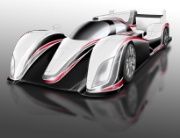
Toyota to compete at LeMans

COLOGNE, Germany– Toyota Motorsport GmbH (TMG) is delighted to confirm that it will take part in several races of the 2012 FIA World Endurance Championship, including the Le Mans 24 Hours.

The entry will be based upon an LMP1 prototype chassis from TMG, and a petrol hybrid powertrain produced by Toyota Motor Corporation in Japan.

The exact scope of this participation and its official name will be confirmed in the coming weeks.

TMG’s high-performance technical centre in Cologne, Germany, where the LMP1 chassis has been designed, developed and produced, will be the base for the team.

The car is planned to take part in a roll-out around the turn of the year prior to an extensive test schedule in early 2012. Further details will be confirmed in due course.

Tadashi Yamashina, Toyota Motor Corporation Senior Managing Officer and TMG Chairman, said: “Toyota Motor Corporation has entered Le Mans before but by using our hybrid technology this time will be a completely new challenge. We want to write a new page in the history of the Le Mans 24 Hours, as well as in the FIA World Endurance Championship, through our use of hybrid technology. In addition, we aim to learn from the experience of competing in such a challenging motorsport environment to enhance our production car technology. Le Mans is a legendary race and I would like to thank the ACO and the FIA for their constructive and positive cooperation over the last few months.”

Toyota Corolla, 2011


Toyota Corolla, 2011

The 2011 Toyota Corolla - the best selling subcompact in America - will feature new front and rear exterior styling, new interior design changes, Toyota Care complimentary maintenance plan, standard Smart Stop Technology, and two new colors. With a compelling combination of responsive, fun-to-drive performance, proven value and significant safety credentials, more than 30 million Corollas have been sold worldwide since 1966. The 2011 Corolla will go in sale in December.

The 2011 Toyota Corolla continues to offer Toyota's Star Safety System™ standard, which includes Vehicle Stability Control (VSC), Traction Control (TRAC), Anti-lock Braking System (ABS), Electronic Brake-force Distribution (EBD) and Brake Assist. It also features the standard Smart Stop Technology brake-override system.

Performance and Efficiency

The 2011 Toyota Corolla is available in three grades: the base-model Corolla, LE, and S. All models are equipped with the 1.8-liter DOHC four-cylinder engine, which produces 132 hp at 6,000 rpm and 128 lb-ft of torque at 4,400 rpm. Dual Variable Valve Timing with intelligence (VVT-i) controls valve timing on both the intake and exhaust camshafts to help optimize performance and fuel economy. Internal components are optimized to reduce friction.

The 1.8-liter engine is paired with a five-speed manual transmission or a four-speed automatic Electronically Controlled Transmission (ECT) on the base Toyota Corolla, while the LE model features the four-speed automatic standard. The four-speed automatic uses a torque converter with flex lockup for increased fuel efficiency, as well as uphill/downhill shift control. For a more engaging driving experience, the driver can shift the four-speed automatic manually by moving the shift lever to the left from its "D" position into the "S" position, then pushing forward for upshifts and back for downshifts. An indicator inside the combination gauge shows the gear selected. The 1.8-liter engine on the Corolla S transmits power through the five-speed manual transmission or the four-speed automatic.
The 1.8-liter engine has earned an EPA-estimated fuel economy rating of 28 mpg city and 35 mpg highway with the five-speed manual transmission, and 26 mpg city and 34 mpg highway with the four-speed automatic transmission.

Handling and Ride

The smooth-riding Toyota Corolla is built around a stiff body structure that relies on high tensile-strength steel, gussets and cross members for its strength, rigidity and lightweight construction. Front suspension is composed of a compact, rigid L-arm-type MacPherson strut with a stabilizer bar. The Corolla's torsion beam rear suspension employs a coil-over-shock arrangement that allows efficient packaging along with solid handling and excellent ride comfort.

Brakes consist of 10.7-inch vented discs up front for all models and nine-inch drums in the rear. An electric power-assist steering system uses a compact motor, speed reducer and torque sensor built into the steering column. The system varies the amount of assistance according to engine RPM and vehicle speed. The result is appropriate weight and responsiveness at higher speeds, and light effort at low speeds. Electric power steering reduces parasitic losses to the engine, thereby aiding fuel economy. It is also environmentally efficient, because it does not require hydraulic oil.

Safety

The Toyota Corolla is engineered to absorb and disperse impact energy throughout the entire body structure, including front and rear crumple zones. Strengthened door beltline reinforcements help share the impact load, which in side impacts is also directed to the underbody. A direct tire pressure monitor system comes standard on every Corolla.
As part of the Toyota Star Safety System, Vehicle Stability Control automatically adjusts engine output and the vehicle's braking force at individual wheels to help control any discrepancy between where the driver is steering and where the vehicle is heading.

All Toyota Corolla models are equipped with six standard airbags, including advanced front airbags, front seat-mounted side airbags, and front-and-rear side-curtain airbags. Seatbelt pretensioners retract the seat belt at the time of a frontal collision, and the dual-stage force limiter helps limit the seat belt force applied to the passenger's chest. Front seats integrate active headrests. If the vehicle is struck from the rear with sufficient force, a cable-actuated mechanism in the active front headrest moves the headrest upward and forward to help limit the movement of the occupant's head. The Corolla also features an energy-absorbing steering column.

Comfort and Convenience

The 2011 Corolla upholds a 40-plus year heritage for providing outstanding value in standard equipment. All models feature a standard all-weather package. The Toyota Corolla grade features new 15-inch steel wheels with full wheel covers; P195/65 R15 tires; a color-keyed front grille and exterior door handles; a heavy-duty rear window defogger with timer; AM/FM/CD audio with four speakers with MP3/WMA playback capability, auxiliary audio jack, and auto sound leveling; air conditioning with pollen filter; intermittent windshield wipers; daytime running lights; black folding power mirrors that are larger for improved rear visibility; tilt and telescopic steering wheel; multi-information display with outside temperature, instant fuel economy, average fuel economy, average speed and travel distance; fabric-trimmed six-way adjustable drivers seat; four-way adjustable front passenger seat; 60/40 split folding rear seats and a 12-volt auxiliary power outlet.

The popular Toyota Corolla LE grade adds variable intermittent windshield wipers with mist cycle; color-keyed power heated outside mirrors; AM/FM/CD audio with six speakers with MP3/WMA playback capability, auxiliary audio jack, and auto sound leveling; cruise control; multi-function in-key remote keyless entry system with lock, unlock, trunk release, panic and remote illuminated entry; power windows with driver side auto down; tilt/telescopic sport steering wheel with metallic accents and audio controls; and power door locks with shift-activated automatic locking feature.

The sporty Corolla S grade adds newly designed 16-inch alloy wheels and 205/55 R16 tires; multi-reflector halogen headlamps with black housing; color-keyed front and rear underbody spoilers, sport side rocker panels, unique S badge and rear mudguards; color-keyed rear spoiler, integrated fog lamps; front sport seats; chrome-tipped exhaust; an new tilt/telescopic sport steering wheel with audio controls; chrome exhaust tip; sport fabric-trimmed six-way adjustable drivers seat and four-way adjustable front passenger seat; metallic style interior trim and analog sport instrumentation.

Options
The Toyota Corolla LE and S grades offer a power tilt/slide moonroof with sliding sunshade; and an AM/FM CD player with MP3/WMA playback capability, six speakers, XM Radio (includes 90 day trial subscription), auxiliary audio jack, USB port with iPod connectivity, CD text display function, auto sound leveling, hands-free phone capability and music streaming via Bluetooth wireless technology.

The Corolla LE offers a Premium Package that includes 16-inch, five-spoke alloy wheels with P205/55R16 tires; integrated fog lamps; power tilt/slide moonroof with sliding sunshade; AM/FM CD player with MP3/WMA playback capability, six speakers, XM Radio (includes 90 day trial subscription), auxiliary audio jack, USB port with iPod connectivity, CD text display function, auto sound leveling, hands-free phone capability and music streaming via Bluetooth wireless technology.

The Exterior Design
The Toyota Corolla's design, created with input from styling studios in Turin, Italy, strikes a sporty profile. New 2011 exterior-design changes were made on the front bumper, radiator grille, front lower grille, headlamps, trunk lid, rear license garnish, rear combination lamp, rear bumper and reflex reflector. Built on a 102.4-inch wheelbase, the Corolla provides room for five, and its 12.3 cu. ft. trunk rivals midsize cars' trunks in capacity. The sporty profile is the result of pulling the A-pillar forward and the C-pillar rearward, which also enhances aerodynamic performance for optimal fuel efficiency.

Character lines sweep from the hood toward the A-pillars and carry back from the top edge of the front bumper into the subtle yet muscular front-fender flares. Additional lines carry rearward at the level of the door handles, emphasizing the Toyota Corolla's low profile, and sweep down from the C-pillar and along the top edges of the rear fenders.

Toyota designers focused significant attention on reducing wind noise. The A-pillar is specially profiled for this purpose. The windshield is made from acoustic glass and the window-frame structure is designed to reduce vibration of side glass. The windshield molding, wiper blade covers and shape of the cowl air intake louvers are all designed to minimize noise. Windshield washer nozzles are partially shielded by the rear edge of the hood, instead of sitting atop the hood or cowling. Inside, the carpeting is designed to better absorb noise.

Interior Design
The 2011 Corolla features a number of new interior design features that enhance its distinctive style. A new seat color and pattern enhances Toyota Corolla's contemporary looks, while the combination meter design has been changed with the aim of enhancing clarity. The instrument panel upper and door trim upper color has been changed, revealing a sophisticated cabin appearance. A newly designed steering wheel on the Corolla S is provides a sporty image.
The Toyota Corolla's driving position and front seats are tailored to a wider range of driver heights. A standard tilt and telescope steering wheel in all models makes it easy for taller drivers to find a comfortable position.

A multi-information display presents a variety of information, including outside temperature, instant fuel economy, average fuel economy, average speed and travel distance.
The Corolla's rear bench seat offers space and comfort for three adults. Careful attention to exhaust system routing provides a nearly flat rear floor, enhancing comfort for the middle passenger. Three interior color schemes are available: Ash, Dark Charcoal and Bisque. The Bisque is paired with Ash Brown trim.

Blog Archive