I couldn't wait until Thursday to pull the trigger on this one while the firestorm of idiocy on both sides of the argument rages almost out of control.
By now, even the most internet-challenged of us have seen the infamous video of the Delaware Senatorial debate where Christine O'Donnell appears not to know what the establishment clause is.
O'Donnell is no dummy, and she knew what she was doing. She was calculating, and she was in fact questioning Coons' knowledge of the 1st Amendment's actual wording.
It's a typical tactic by religious fascists to argue that prayer and Creationism in school isn't prohibited Constitutionally. It's of course incredibly disingenuous because of COURSE the intent is to keep religion and the state separate. What the hell else could you take from that? The proof is in the pudding with their pervasive "Moslem" comments. They'd 'd no sooner support Islamic prayer in a public school than support no prayer at all.
These people always want their cake and to eat it, too. O'Donnell and her supporters are the first to cite the 1st amendment when the government is telling religion what to do. But when religion is being imposed on everyone else - via the government in public schools and policy - crickets. No problem there at all.
Anyways, the term "separation of church and state" actually originated from Jefferson's correspondence with the Danbury Baptists. I just re-learned (I vaguely recall my U.S. History), this myself via Sarah Palin's twitter (linked to the link she posted), ironically because I'm quite certain she didn't intend for that piece of knowledge to passed on.
I don't have a problem with Creationism being taught in public school, as long as it is in a Theology class, i.e. Religious Studies, or within the context of a language curriculum. We studied the Bible as literature in high school, and this is completely constitutional. A teacher instructing, or the government requiring, that it be taught as "truth" is another matter entirely. Further, Creationism is not based on deductive reason. It's totally opposite, so how can it be part of a science curriculum?
I'll grant that the way evolution is taught in most schools could fall under the same criticism. However, since I'm not a botanist, a paleontologist, or a mammalogist, I won't argue how to best instruct evolution by employing the scientific method.
Moving on, the United States Federal Appeals Court just upheld the Illinois "moment of silence" in public schools. There was a time when I would've cried "slippery slope." But who am I to begrudge the available time made for someone to utter some incantation to whatever deity they want? As long as my kid can pull out his Richard Dawkins book at the same time, I think that's fair.
The slippery slope argument is admittedly laziness on our part in place of vigilance on when the line is crossed. The court's ruling seems like pretty reasonable middle ground, making accommodations for everyone. The problem is, religious fascists like O'Donnell try to grab yards and handfuls when offered an equatable inch. Make no mistake, however; she and her ilk will try to cross that line and use these kind wedges to open the door for far more pervasive impositions on our freedoms.
So don't be lazy. Be honest with yourself about where that line really is, and guard it with your life.
Into the woodshed
I don't think I've ever experienced such a battle in the final lap of any race as I did Sunday in Carpentersville, number 5 in the Chicago Cross Cup series.
After the typical first lap disaster on probably the most technical of courses yet this season, in which I went into the tape twice and endoed once, not to mention getting passed at each barrier remount, I found myself in a knife fight for a top 15 placing among three other riders, Sasha Reschechtko (Tati), Justin Merkey (Rhythm Racing), and Tyler Avery (Pegasus). We constantly stole and gave up lines to each other turn after turn, or tried to drop each other in the pitted and rutted straightaways.

(Bill Draper)
As we raged into the final sweeping arc before the last u-turn to the line, it was Justin, me, and Tyler. I shifted to the big ring and tried to pull away but immediately we were elbow to elbow. I stupidly was still trying to move up on right, but that would've sent me into the tape and a tree on the final right u-turn - or would've crashed all three of us out, so by time I dropped back to reposition myself, it was far too late. Tyler broke free at the same time, and I crossed the line 3rd out of that group for 16th place.
I was pretty pissed at myself for misplaying the end, but once the High Life was cracked open and I was watching the 4Bs negotiate the pump section, all was again right with the world.
Overall the best day yet spent racing this fall. I had my best placing yet in the 30+ (22nd) - even while washing out on the first lap heading into the pumpers and face-planting in a turn - and the long-awaited Chubby Spud found its way into my hand once again:

Incredibly, I've moved up two places in the overall standings to eighth - wait, are we rewarding mediocrity here? I'm gonna have to start red-baiting this obviously socialist series?!? Don't worry, my much-harder-working call-up mates; I'm traveling the next two weekends in a pumpkin-carving, cider-drinking, corn-maze-claustrophobia-panicked fury, so that current placing will drop with the November temperatures. While Bryan Lee is getting his call-up dressed as Lady Gaga in a raw-meat skinsuit, I'll drinking all of my dad's beer while handing out Halloween candy on his porch wearing a wrestling mask.
After the typical first lap disaster on probably the most technical of courses yet this season, in which I went into the tape twice and endoed once, not to mention getting passed at each barrier remount, I found myself in a knife fight for a top 15 placing among three other riders, Sasha Reschechtko (Tati), Justin Merkey (Rhythm Racing), and Tyler Avery (Pegasus). We constantly stole and gave up lines to each other turn after turn, or tried to drop each other in the pitted and rutted straightaways.

(Bill Draper)
As we raged into the final sweeping arc before the last u-turn to the line, it was Justin, me, and Tyler. I shifted to the big ring and tried to pull away but immediately we were elbow to elbow. I stupidly was still trying to move up on right, but that would've sent me into the tape and a tree on the final right u-turn - or would've crashed all three of us out, so by time I dropped back to reposition myself, it was far too late. Tyler broke free at the same time, and I crossed the line 3rd out of that group for 16th place.
I was pretty pissed at myself for misplaying the end, but once the High Life was cracked open and I was watching the 4Bs negotiate the pump section, all was again right with the world.
Overall the best day yet spent racing this fall. I had my best placing yet in the 30+ (22nd) - even while washing out on the first lap heading into the pumpers and face-planting in a turn - and the long-awaited Chubby Spud found its way into my hand once again:

Incredibly, I've moved up two places in the overall standings to eighth - wait, are we rewarding mediocrity here? I'm gonna have to start red-baiting this obviously socialist series?!? Don't worry, my much-harder-working call-up mates; I'm traveling the next two weekends in a pumpkin-carving, cider-drinking, corn-maze-claustrophobia-panicked fury, so that current placing will drop with the November temperatures. While Bryan Lee is getting his call-up dressed as Lady Gaga in a raw-meat skinsuit, I'll drinking all of my dad's beer while handing out Halloween candy on his porch wearing a wrestling mask.

Cowabunga Dude makes The Ninja Turtle Van

The Turtles played a huge role in his childhood, growing up with all his cousins, playing Ninja Turtles while his Uncle Harry (Uncle Shredder) chased them around doing an exact voice of The Shredder. He used to drive them around in his Caravan, and now every time he sees one it reminds him of the Turtles Van. Cowabunga Dude!!!.
Clown car used to transport illegal immigrant clowns

 , foam clubs and nerf shot guns
 . Border patrol were also given all terrain clown shoes
 and canisters of silly string
 .
.
The History of Auto Theft: A Bibliography


Archival Sources
Record Group 60, National Archives, Records of the Department of Justice (General Records of the Department of Justice. Class 26, Dyer Act – Automobile Theft); Litigation Case Files, Compiled 1919-1960).
Record Group 129, NA, Records of the Bureau of Prisons, Notorious Offender Files, Gabriel Vigoretti Files.
Vertical File, Theft Protection, National Automotive History Collection, Detroit
University of Toledo Archives. Auto Theft Records, City of Toledo, 1923-1929.
Government Documents
Harlow, Caroline Wolf. Motor Vehicle Theft. Washington, D.C.: U.S. Dept. of Justice, Bureau of justice Statistics, 1988.
Klaus, Patsy A. Carjacking, 1993-2002. U.S. Department of Justice, Office of Justice Programs, Bureau of Justice Statistics, 2004. Electronic Resource.
Mexico—providing for the recovery and return of stolen or embezzled motor vehicles, trailers, airplanes, or the component parts of any of them: message from the President of the United States transmitting a convention between the United States of America and the United Mexican States for the recovery and return of stolen or embezzled motor vehicles, trailers, airplanes, or the component parts of any of them, signed at Mexico City on October 6, 1936. Washington: G.P.O., 1937.
National Association of Attorneys General. Committee on the Office of Attorney General. Organized Auto Theft. Raleigh, NC, 1979.
National Institute of Law Enforcement and Criminal justice, U.S. Department of Justice. Preliminary Study on the Effectiveness of Auto Anti-theft Devices. Washington: G.P.O., 1975.
Treaty with Honduras for Return of Stolen, Robbed, and Embezzled Vehicles…Signed at Tegucigalpa on November 23, 2001. Washington, D.C.: G.P.O., 2002.
U.S. Congress. House of Representatives. Hearings before the Committee on the Judiciary, 69th Congress 1st Session. Amendment of the National Motor Vehicle Theft Act. January 18, 1926. Washington, D.C. G.P.O., 1926.
U.S. Congress. House of Representatives. Motor Vehicle Theft Prevention Act: Joint hearing before the Subcommittee on Consumer Protection. Washington: G.P.O., 1980
U.S. Congress. House of Representatives. Motor Vehicle Theft Prevention Act of 1980: Report Together with Additional and Dissenting Views. Washington: G.P.O., 1980.
United Staes. Congress. Senate. Committee on Foreign Relations. Treaties with Belize, Costa Rica, the Dominican Republic, Guatemala, and Panama…. Washington, D.C.: G.P.O., 2000.
United States. 1937, Convention with Mexico providing for the recovery and return of stolen or embezzled motor vehicles, trailers, airplanes, or the component parts of any of them: report (to accompany Executive A, 75th Cong., 1st sess.). Washington: U.S. G.P.O.
Secondary Sources and Methodology
Blanke, David. Hell on Wheels: the Promise and Peril of America’s Car Culture, 1900-1940. Lawrence, KS: University of Kansas Press, 2007.
Borg, Kevin. Auto Mechanics: Technology and Expertise in Twentieth-Century America. Baltimore, MD: Johns Hopkins University Press, 2007.
Brilliant, Ashleigh. The Great Car Craze: How Southern California Collided with the Automobile in the 1920s. Santa Barbara, CA: Woodbridge Press, 1989.
Bottles, Scott L. Los Angeles and the Automobile: The Making of a Modern City. Berkeley: Los Angeles, 1987.
Challinger, Dennis. "Car Security Hardware -- How GoodIs It?" In Car Theft: Putting on the Brakes, Proceedings of Seminar on Car Theft, May 21, 1987. Sydney: National Roads and Motorists' Association, 1987.
Chaplin, Healther. Smartbomb: The Quest for Art, Entertainment and Big Bucks in the Videogame Revolution. Chapel Hill, N.C.: Algonquin, 2005.
Clarke, Ronald V. and Patricia M. Harris. “Auto Theft and Prevention. “ Crime and Justice, 16 (1992), 1-54.
Corman, Hope, and Naci Mocan, “Carrots, Sticks, and Broken Windows.” Journal of Law and Economics, 48 (April, 2005), 235-66.
Dubber, Markus D. and Lindsay Farmer. Modern Histories of Crime and Punishment. Stanford CA: Stanford University Press, 2007.
Emsely, Clive and Louis A. Knafla. Crime History and Histories of Crime: Studies in the Historiography of Crime and Criminal Justice in Modern History. Westport, CT: Greenwood Press, 1996.
Flink, James J. The Automobile Age. Cambridge, MA: MIT Press, 1988.
Godfrey, Barry, Chris A. Williams, and Paul Lawrence. History & Crime. London; Thousand Oaks, CA: SAGE Publications, 2008.
Gould, Leroy C. “The Changing Structure of Property Crime in an Affluent Society.” Social Forces, 48 (September, 1969), 50-59.
Hall, Jerome. “Theft, Law, and Society.” American Bar Association Journal, 54 (October, 1968), 960-7.
Harris, Patricia M. and Ronald V. Clarke. "Car Chopping, Parts Marking and the Motor Vehicle Theft Enforcement Act of 1984." Sociology and Social Research, 75 (1991), 228-238.
Heitmann, John. The Automobile and American Life. Jefferson, NC and London: McFarland, 2009.
Hibbert, Christopher. The Roots of Evil: A Social History of Crime and Punishment. Westport, CT: Greenwood Press, 1978.
Hidy, Logan A. “A Study of Automobile Theft and of the Juvenile Involved.” M.A. Thesis, Ohio University, 1951.
Karmen, Andrew A. "Auto Theft and Corporate Irresponsibility." Contemporary Crises, 5 (1981), 63-81.
Lamm, Michael. “Are Car Keys Obsolete,” American Heritage Invention & Technology 23 (Summer 2008): 7 ff.
Rick Linden, etal. “Research, Policy Development, and Progress: Antisocial Behavior and the Automobile,” Canadian Public Policy, 36 (March, 2010), S83-S93.
Miller, Kiri. “Grove Street Grimm: Grand Theft Auto and Digital Folklore,” Journal of American Folklore, 121 (Summer, 2008), 255-285.
McGurrin, Lisa. "The Lowdown on Lo-Jack." New England Business, 10 (1988), 48-53.
Norton, Peter D. Fighting Traffic: the Dawn of the Motor Age in the American City. Cambridge, MA: MIT Press, 2008.
O'Connell, Sean. The Car and British Society: Class, Gender and Motoring, 1896-1939. Manchester, UK: Manchester University Press, 1998.
Outerbridge, William R, et. al. “The Dyer Act Violators: A Typology of Federal Car Thieves.” University of California: January 1967.
Rae, John B. The American Automobile. Chicago: University of Chicago Press, 1965.
Ratledge, Marcus Wayne. Hot Cars! An inside Look at the Auto Theft industry. Boulder, CO: Paladin Press, 1982.
Seiler, Cotton. Republic of Drivers: A Cultural History of Automobility in America. Chicago, IL: University of Chicago Press,2008.
Turnbull, Linda S., Elaine Hallesey Hendrix, Borden D. Dent. Atlas of Crime: Mapping the Criminal Landscape. Phoenix, AZ, Oryx press, 2000.
Wolcott, David. “The Cop Will Get You”: The Police and Discretionary Juvenile Justice, 1890-1940. The Journal of Social History, 35, (Winter 2001): 349-371.
Primary Source Ephemera, Articles and Books
Baughman, Austin E. “Protective Measures for the Automobile and Its Owner.” Annals of the American Academy of Political and Social Science: The Automobile Its Province and Its Problems, 116, (Nov., 1924): 194-198.
Brennan, John. “Automobile Thefts.” The American City, December 1917.
Bulger, James E. “Automobile Thefts.” Journal of Law and Criminology, 23, (Jan. - Feb., 1933): 806-810.
“Catching Auto Thieves.” The American City. October 1936.
Chapman Industries Corporation. Chapman Security Systems. Elk Grove Village, IL: Chapman Industries, 1979.
___________________________. How to Steal a Car (its easy!). Elk Grove Village, IL: Chapman Industries, 1987.
“Checking Automobile Thefts as Massachusetts Does It.” The Literary Digest. October 9, 1920.
Chamberlain, Henry Barrett. “The Proposed Illinois Bureau of Criminal Records and Statistics.” Journal of the Institute of Criminal Law and Criminology, 12 (Feb., 1922): 518-528.
Cline, C. Frank. Investigation of Auto theft with Particular Reference to Various Modus Operandi. N.P.: n.p., 1940.
Cochran, Wallace C.D. “The Auto Thief Stopper: A pamphlet Addressed to Capital, and Pointing the Way to the Establishment of a Gigantic New Business Enterprise, VIZ : -- Wholesale Automobile Theft Insurance, with the Risk Eliminated.” 1922. Vertical File, Theft Protection, National Automotive History Collection.
Courtney, Thomas J. “Hot Shorts.” Saturday Evening Post, November 30, 1935.
Crossman, Edward C. “How Your Automobile May Be Stolen.” Illustrated World, March 1917.
Davis, William J. “Stolen Automobile Investigations.” Journal of Criminal Law and Criminology, 28, (Jan. - Feb., 1938): 720-738.
Deloach, E.R. “SCR Auto Burglar Alarm.” Electronics World, 76 (August, 1966), 64-5.
Foiling the Auto Thief: the Fedco System of Automobile Theft Prevention and Detection. New York: Fedco Number Plate Corporation, 1927.
Gatlin, Dana. “In Case of Theft.” Collier’s, January 8, 1916.
Gleason, Sterling. “Auto-Stealing Racket Smashed by New Methods.” Popular Science Monthly, August 1934.
Gutknecht. The Chicago Boys’ Court in 1933. A Report on its Organization, Procedure and Results – An Analysis of its Wrecking and the Responsibility of the Chicago Crime Commission – A Discussion of its Relations to Auto Thefts and Auto Fences – A Program for Reconstruction – A Challenge to the Citizens of Chicago. N.P., n.p., 1935?
Hall, Jerome. “Federal Anti-Theft Legislation.” Law and Contemporary Problems: Extending Federal Powers over Crime, 1,(Oct., 1934): 424-434.
Hepbron, James M. “The Baltimore Crime Commission.” Annals of the American Academy of Political and Social Science, Crime: Its Prevention and Punishment, 125, (May 1926): 103-106.
Hoover, J. Edgar. “Bla-Bla, Black Man.” American Magazine, September 1936.
Hoover, J. Edgar. "Auto Theft is Big Business." Motor Trend, 4(December, 1952), 17-19.
“How Safe Is Your Automobile?” Popular Mechanics Magazine. October 1924.
“Joe Newell recovered 630 stolen automobiles last year.” American Magazine. February 1925.
Johnston, Alexander. “Stop Thief!” Country Life, June 1919.
“Let the Auto Thief Beware.” Illustrated World. August 1919.
Lewis, Roy. “Watch Your Car.” Outing, May 1917.
Mandel, Arch. “The Automobile and the Police.” Annals of the American Academy of Political and Social Science: The Automobile Its Province and Its Problems, 116, (Nov., 1924): 191-194.
Mead, Bennet. “Police Statistics.” Annals of the American Academy of Political and Social Science: The Police and the Crime Problem, 146, (Nov., 1929): 74-95.
“More than a quarter of a million cars stolen each year.” Travel. October 1925.
“My Car Has No Title.” Popular Science, 166 (February, 1955), 132-135.
O’Connor, Liam. “Last Night My Car Was Stolen.” Popular Science, 162 (May 1953), 116-119.
Ogle, Alfred G. Automobile Insurance Against fire, Theft, Explosion, and Transportation Risks. Brooklyn, NY: the company, 1910.
Perry, Harry Wilkin. “Anti-Joy Ride Devices,” Scientific American (January 15, 1910), 51,
“Preventing Auto Theft.” Popular Science Monthly. March 1926.
Potter, Ellen C. “Spectacular Aspects of Crime in Relation to the Crime Wars.” Annals of the American Academy of Political and Social Science, Crime: Its Prevention and Punishment, 125, (May 1926): 1-19.
“Radatron Auto Sentry Educational Burglar Alarm Kit,” Radio-Electronics, 44 (March, 1973), 26.
Rubin, Edward. “A Statistical Study of Federal Crime Prosecutions.” Law and Contemporary Problems, 1, (Oct., 1934): 494-508.
Rules, Rates and Premiums Governing the Insuring of Automobiles Against the Hazards of Fire and Transportation, theft, Comprehensive, Collision and Miscellaneous Coverages. Chicago: Branham, 1932.
Sandler, J. “Build PM’s undercover Auto Cop.” Popular Mechanics, 157 (march, 1982), 24.
“Science Fights Crime With New Inventions,” Science News Letter (March 16, 1935): 164.
Shepherd, William G. “I wonder who’s driving her now. Colliers, July 23, 1927.
Smith, Ernest M. “Services of the American Automobile Association.” Annals of the American Academy of Political and Social Science: The Automobile Its Province and Its Problems. 116, (Nov., 1924): 269-274.
Simpson, George E. “The Chicago Crime Commission.” Journal of Criminal Law and Criminology, 26, (Sep., 1935): 401-420.
Teale, Edwin. “Auto Stealing Now $50,000,000-a-Year Racket.” Popular Science Monthly, January 1933.
“To Discourage Auto-Thieves Don’t Buy From Them.” The Literary Digest. November 1, 1919.
“Tricks of the Automobile Thief.” Popular Mechanics Magazine. May 1929.
“Two Kinds of Motor Thefts -- Real and Imitation.” The Literary Digest, August 26, 1922.
“U.S. Agents Prepare to Hunt Auto Thieves,” November 22, 1919, clipping, Vertical File, Theft Protection, National Automotive History Collection.
“Undoing Dyer.” Time Magazine March 24, 1930.
Winkleplech , R.L., “Stamp Out Auto theft [Auto Sentinel Alarm].” Popular Electronics, 26 (March, 1967), 59-61.
Works of Fiction
Bolin, M.C. Gone in 60 Seconds: a Novel. New York: Hyperion, 2000.
Boyle, T. Coraghessan. Talk Talk: a novel. New York: Penguin, 2007.
Brewer, Steve. Boost. Denver, CO: Speck Press, 2004.
Dale, William. Outside the Law. New York: Dodge Publishing, 1938.
Evanovich, Janet. Motor Mouth. New York: Harper Collins, 2006.
Gores, Joe. 32 Cadillacs. New York: Mysterious Press, 1992.
Janson, Hank. The Exotic Seductress. Derby, CT: New International Library, 1964.
Klein, Edwin G. The Stolen Automobile. N.P.: the author, 1919.
March, Stephen. Armadillo. Huntsville, TX: Texas Review Press, 2003.
Watts, Timothy. Grand Theft. New York: G.P. Putnam’s Sons, 2003.
Westlake, Donald E. The Road to Ruin. Thorndike, ME: Center Point Publishing, 2004.
Film:
"Gone in Sixty Seconds" (1974), Toby Halicki
"Gone in Sixty Seconds" (2000), Touchstone
Internet Sources
"Motor Vehicle Theft (most recent) by State." http://www.statemaster.com/red/graph/cri_mot_veh_the-crime-motor-vehcile-theft&b_pri… Accessed October 13, 2010.
Barry Webb. Steering Column Locks and Motor Vehicle Theft: Evaluations from Three Countries. Police Research Group, U.K.,1984.http://www.popcenter.org/library/crimeprevention/volume_02/04webb.pdf. Accessed October 15, 2010.
Federal Bureau of Investigation. "Car Cloning: A New Twist on an Old Crime." http://www.fbi.gov/news/stories/2007/march/carcloning_032907?serachterm=+++motor+… Accessed October 14, 2010.
Federal Bureau of Investigation, “Lawless Years: 1921-1933,” [Database Online] (Washington DC accessed 17 May 2008) available from http://www.fbi.gvov/libref/ historic/history/lawless.htm.
Record Group 60, National Archives, Records of the Department of Justice (General Records of the Department of Justice. Class 26, Dyer Act – Automobile Theft); Litigation Case Files, Compiled 1919-1960).
Record Group 129, NA, Records of the Bureau of Prisons, Notorious Offender Files, Gabriel Vigoretti Files.
Vertical File, Theft Protection, National Automotive History Collection, Detroit
University of Toledo Archives. Auto Theft Records, City of Toledo, 1923-1929.
Government Documents
Harlow, Caroline Wolf. Motor Vehicle Theft. Washington, D.C.: U.S. Dept. of Justice, Bureau of justice Statistics, 1988.
Klaus, Patsy A. Carjacking, 1993-2002. U.S. Department of Justice, Office of Justice Programs, Bureau of Justice Statistics, 2004. Electronic Resource.
Mexico—providing for the recovery and return of stolen or embezzled motor vehicles, trailers, airplanes, or the component parts of any of them: message from the President of the United States transmitting a convention between the United States of America and the United Mexican States for the recovery and return of stolen or embezzled motor vehicles, trailers, airplanes, or the component parts of any of them, signed at Mexico City on October 6, 1936. Washington: G.P.O., 1937.
National Association of Attorneys General. Committee on the Office of Attorney General. Organized Auto Theft. Raleigh, NC, 1979.
National Institute of Law Enforcement and Criminal justice, U.S. Department of Justice. Preliminary Study on the Effectiveness of Auto Anti-theft Devices. Washington: G.P.O., 1975.
Treaty with Honduras for Return of Stolen, Robbed, and Embezzled Vehicles…Signed at Tegucigalpa on November 23, 2001. Washington, D.C.: G.P.O., 2002.
U.S. Congress. House of Representatives. Hearings before the Committee on the Judiciary, 69th Congress 1st Session. Amendment of the National Motor Vehicle Theft Act. January 18, 1926. Washington, D.C. G.P.O., 1926.
U.S. Congress. House of Representatives. Motor Vehicle Theft Prevention Act: Joint hearing before the Subcommittee on Consumer Protection. Washington: G.P.O., 1980
U.S. Congress. House of Representatives. Motor Vehicle Theft Prevention Act of 1980: Report Together with Additional and Dissenting Views. Washington: G.P.O., 1980.
United Staes. Congress. Senate. Committee on Foreign Relations. Treaties with Belize, Costa Rica, the Dominican Republic, Guatemala, and Panama…. Washington, D.C.: G.P.O., 2000.
United States. 1937, Convention with Mexico providing for the recovery and return of stolen or embezzled motor vehicles, trailers, airplanes, or the component parts of any of them: report (to accompany Executive A, 75th Cong., 1st sess.). Washington: U.S. G.P.O.
Secondary Sources and Methodology
Blanke, David. Hell on Wheels: the Promise and Peril of America’s Car Culture, 1900-1940. Lawrence, KS: University of Kansas Press, 2007.
Borg, Kevin. Auto Mechanics: Technology and Expertise in Twentieth-Century America. Baltimore, MD: Johns Hopkins University Press, 2007.
Brilliant, Ashleigh. The Great Car Craze: How Southern California Collided with the Automobile in the 1920s. Santa Barbara, CA: Woodbridge Press, 1989.
Bottles, Scott L. Los Angeles and the Automobile: The Making of a Modern City. Berkeley: Los Angeles, 1987.
Challinger, Dennis. "Car Security Hardware -- How GoodIs It?" In Car Theft: Putting on the Brakes, Proceedings of Seminar on Car Theft, May 21, 1987. Sydney: National Roads and Motorists' Association, 1987.
Chaplin, Healther. Smartbomb: The Quest for Art, Entertainment and Big Bucks in the Videogame Revolution. Chapel Hill, N.C.: Algonquin, 2005.
Clarke, Ronald V. and Patricia M. Harris. “Auto Theft and Prevention. “ Crime and Justice, 16 (1992), 1-54.
Corman, Hope, and Naci Mocan, “Carrots, Sticks, and Broken Windows.” Journal of Law and Economics, 48 (April, 2005), 235-66.
Dubber, Markus D. and Lindsay Farmer. Modern Histories of Crime and Punishment. Stanford CA: Stanford University Press, 2007.
Emsely, Clive and Louis A. Knafla. Crime History and Histories of Crime: Studies in the Historiography of Crime and Criminal Justice in Modern History. Westport, CT: Greenwood Press, 1996.
Flink, James J. The Automobile Age. Cambridge, MA: MIT Press, 1988.
Godfrey, Barry, Chris A. Williams, and Paul Lawrence. History & Crime. London; Thousand Oaks, CA: SAGE Publications, 2008.
Gould, Leroy C. “The Changing Structure of Property Crime in an Affluent Society.” Social Forces, 48 (September, 1969), 50-59.
Hall, Jerome. “Theft, Law, and Society.” American Bar Association Journal, 54 (October, 1968), 960-7.
Harris, Patricia M. and Ronald V. Clarke. "Car Chopping, Parts Marking and the Motor Vehicle Theft Enforcement Act of 1984." Sociology and Social Research, 75 (1991), 228-238.
Heitmann, John. The Automobile and American Life. Jefferson, NC and London: McFarland, 2009.
Hibbert, Christopher. The Roots of Evil: A Social History of Crime and Punishment. Westport, CT: Greenwood Press, 1978.
Hidy, Logan A. “A Study of Automobile Theft and of the Juvenile Involved.” M.A. Thesis, Ohio University, 1951.
Karmen, Andrew A. "Auto Theft and Corporate Irresponsibility." Contemporary Crises, 5 (1981), 63-81.
Lamm, Michael. “Are Car Keys Obsolete,” American Heritage Invention & Technology 23 (Summer 2008): 7 ff.
Rick Linden, etal. “Research, Policy Development, and Progress: Antisocial Behavior and the Automobile,” Canadian Public Policy, 36 (March, 2010), S83-S93.
Miller, Kiri. “Grove Street Grimm: Grand Theft Auto and Digital Folklore,” Journal of American Folklore, 121 (Summer, 2008), 255-285.
McGurrin, Lisa. "The Lowdown on Lo-Jack." New England Business, 10 (1988), 48-53.
Norton, Peter D. Fighting Traffic: the Dawn of the Motor Age in the American City. Cambridge, MA: MIT Press, 2008.
O'Connell, Sean. The Car and British Society: Class, Gender and Motoring, 1896-1939. Manchester, UK: Manchester University Press, 1998.
Outerbridge, William R, et. al. “The Dyer Act Violators: A Typology of Federal Car Thieves.” University of California: January 1967.
Rae, John B. The American Automobile. Chicago: University of Chicago Press, 1965.
Ratledge, Marcus Wayne. Hot Cars! An inside Look at the Auto Theft industry. Boulder, CO: Paladin Press, 1982.
Seiler, Cotton. Republic of Drivers: A Cultural History of Automobility in America. Chicago, IL: University of Chicago Press,2008.
Turnbull, Linda S., Elaine Hallesey Hendrix, Borden D. Dent. Atlas of Crime: Mapping the Criminal Landscape. Phoenix, AZ, Oryx press, 2000.
Wolcott, David. “The Cop Will Get You”: The Police and Discretionary Juvenile Justice, 1890-1940. The Journal of Social History, 35, (Winter 2001): 349-371.
Primary Source Ephemera, Articles and Books
Baughman, Austin E. “Protective Measures for the Automobile and Its Owner.” Annals of the American Academy of Political and Social Science: The Automobile Its Province and Its Problems, 116, (Nov., 1924): 194-198.
Brennan, John. “Automobile Thefts.” The American City, December 1917.
Bulger, James E. “Automobile Thefts.” Journal of Law and Criminology, 23, (Jan. - Feb., 1933): 806-810.
“Catching Auto Thieves.” The American City. October 1936.
Chapman Industries Corporation. Chapman Security Systems. Elk Grove Village, IL: Chapman Industries, 1979.
___________________________. How to Steal a Car (its easy!). Elk Grove Village, IL: Chapman Industries, 1987.
“Checking Automobile Thefts as Massachusetts Does It.” The Literary Digest. October 9, 1920.
Chamberlain, Henry Barrett. “The Proposed Illinois Bureau of Criminal Records and Statistics.” Journal of the Institute of Criminal Law and Criminology, 12 (Feb., 1922): 518-528.
Cline, C. Frank. Investigation of Auto theft with Particular Reference to Various Modus Operandi. N.P.: n.p., 1940.
Cochran, Wallace C.D. “The Auto Thief Stopper: A pamphlet Addressed to Capital, and Pointing the Way to the Establishment of a Gigantic New Business Enterprise, VIZ : -- Wholesale Automobile Theft Insurance, with the Risk Eliminated.” 1922. Vertical File, Theft Protection, National Automotive History Collection.
Courtney, Thomas J. “Hot Shorts.” Saturday Evening Post, November 30, 1935.
Crossman, Edward C. “How Your Automobile May Be Stolen.” Illustrated World, March 1917.
Davis, William J. “Stolen Automobile Investigations.” Journal of Criminal Law and Criminology, 28, (Jan. - Feb., 1938): 720-738.
Deloach, E.R. “SCR Auto Burglar Alarm.” Electronics World, 76 (August, 1966), 64-5.
Foiling the Auto Thief: the Fedco System of Automobile Theft Prevention and Detection. New York: Fedco Number Plate Corporation, 1927.
Gatlin, Dana. “In Case of Theft.” Collier’s, January 8, 1916.
Gleason, Sterling. “Auto-Stealing Racket Smashed by New Methods.” Popular Science Monthly, August 1934.
Gutknecht. The Chicago Boys’ Court in 1933. A Report on its Organization, Procedure and Results – An Analysis of its Wrecking and the Responsibility of the Chicago Crime Commission – A Discussion of its Relations to Auto Thefts and Auto Fences – A Program for Reconstruction – A Challenge to the Citizens of Chicago. N.P., n.p., 1935?
Hall, Jerome. “Federal Anti-Theft Legislation.” Law and Contemporary Problems: Extending Federal Powers over Crime, 1,(Oct., 1934): 424-434.
Hepbron, James M. “The Baltimore Crime Commission.” Annals of the American Academy of Political and Social Science, Crime: Its Prevention and Punishment, 125, (May 1926): 103-106.
Hoover, J. Edgar. “Bla-Bla, Black Man.” American Magazine, September 1936.
Hoover, J. Edgar. "Auto Theft is Big Business." Motor Trend, 4(December, 1952), 17-19.
“How Safe Is Your Automobile?” Popular Mechanics Magazine. October 1924.
“Joe Newell recovered 630 stolen automobiles last year.” American Magazine. February 1925.
Johnston, Alexander. “Stop Thief!” Country Life, June 1919.
“Let the Auto Thief Beware.” Illustrated World. August 1919.
Lewis, Roy. “Watch Your Car.” Outing, May 1917.
Mandel, Arch. “The Automobile and the Police.” Annals of the American Academy of Political and Social Science: The Automobile Its Province and Its Problems, 116, (Nov., 1924): 191-194.
Mead, Bennet. “Police Statistics.” Annals of the American Academy of Political and Social Science: The Police and the Crime Problem, 146, (Nov., 1929): 74-95.
“More than a quarter of a million cars stolen each year.” Travel. October 1925.
“My Car Has No Title.” Popular Science, 166 (February, 1955), 132-135.
O’Connor, Liam. “Last Night My Car Was Stolen.” Popular Science, 162 (May 1953), 116-119.
Ogle, Alfred G. Automobile Insurance Against fire, Theft, Explosion, and Transportation Risks. Brooklyn, NY: the company, 1910.
Perry, Harry Wilkin. “Anti-Joy Ride Devices,” Scientific American (January 15, 1910), 51,
“Preventing Auto Theft.” Popular Science Monthly. March 1926.
Potter, Ellen C. “Spectacular Aspects of Crime in Relation to the Crime Wars.” Annals of the American Academy of Political and Social Science, Crime: Its Prevention and Punishment, 125, (May 1926): 1-19.
“Radatron Auto Sentry Educational Burglar Alarm Kit,” Radio-Electronics, 44 (March, 1973), 26.
Rubin, Edward. “A Statistical Study of Federal Crime Prosecutions.” Law and Contemporary Problems, 1, (Oct., 1934): 494-508.
Rules, Rates and Premiums Governing the Insuring of Automobiles Against the Hazards of Fire and Transportation, theft, Comprehensive, Collision and Miscellaneous Coverages. Chicago: Branham, 1932.
Sandler, J. “Build PM’s undercover Auto Cop.” Popular Mechanics, 157 (march, 1982), 24.
“Science Fights Crime With New Inventions,” Science News Letter (March 16, 1935): 164.
Shepherd, William G. “I wonder who’s driving her now. Colliers, July 23, 1927.
Smith, Ernest M. “Services of the American Automobile Association.” Annals of the American Academy of Political and Social Science: The Automobile Its Province and Its Problems. 116, (Nov., 1924): 269-274.
Simpson, George E. “The Chicago Crime Commission.” Journal of Criminal Law and Criminology, 26, (Sep., 1935): 401-420.
Teale, Edwin. “Auto Stealing Now $50,000,000-a-Year Racket.” Popular Science Monthly, January 1933.
“To Discourage Auto-Thieves Don’t Buy From Them.” The Literary Digest. November 1, 1919.
“Tricks of the Automobile Thief.” Popular Mechanics Magazine. May 1929.
“Two Kinds of Motor Thefts -- Real and Imitation.” The Literary Digest, August 26, 1922.
“U.S. Agents Prepare to Hunt Auto Thieves,” November 22, 1919, clipping, Vertical File, Theft Protection, National Automotive History Collection.
“Undoing Dyer.” Time Magazine March 24, 1930.
Winkleplech , R.L., “Stamp Out Auto theft [Auto Sentinel Alarm].” Popular Electronics, 26 (March, 1967), 59-61.
Works of Fiction
Bolin, M.C. Gone in 60 Seconds: a Novel. New York: Hyperion, 2000.
Boyle, T. Coraghessan. Talk Talk: a novel. New York: Penguin, 2007.
Brewer, Steve. Boost. Denver, CO: Speck Press, 2004.
Dale, William. Outside the Law. New York: Dodge Publishing, 1938.
Evanovich, Janet. Motor Mouth. New York: Harper Collins, 2006.
Gores, Joe. 32 Cadillacs. New York: Mysterious Press, 1992.
Janson, Hank. The Exotic Seductress. Derby, CT: New International Library, 1964.
Klein, Edwin G. The Stolen Automobile. N.P.: the author, 1919.
March, Stephen. Armadillo. Huntsville, TX: Texas Review Press, 2003.
Watts, Timothy. Grand Theft. New York: G.P. Putnam’s Sons, 2003.
Westlake, Donald E. The Road to Ruin. Thorndike, ME: Center Point Publishing, 2004.
Film:
"Gone in Sixty Seconds" (1974), Toby Halicki
"Gone in Sixty Seconds" (2000), Touchstone
Internet Sources
"Motor Vehicle Theft (most recent) by State." http://www.statemaster.com/red/graph/cri_mot_veh_the-crime-motor-vehcile-theft&b_pri… Accessed October 13, 2010.
Barry Webb. Steering Column Locks and Motor Vehicle Theft: Evaluations from Three Countries. Police Research Group, U.K.,1984.http://www.popcenter.org/library/crimeprevention/volume_02/04webb.pdf. Accessed October 15, 2010.
Federal Bureau of Investigation. "Car Cloning: A New Twist on an Old Crime." http://www.fbi.gov/news/stories/2007/march/carcloning_032907?serachterm=+++motor+… Accessed October 14, 2010.
Federal Bureau of Investigation, “Lawless Years: 1921-1933,” [Database Online] (Washington DC accessed 17 May 2008) available from http://www.fbi.gvov/libref/ historic/history/lawless.htm.
New Slot It Alfa and Sauber
Two new Slot It's to show.
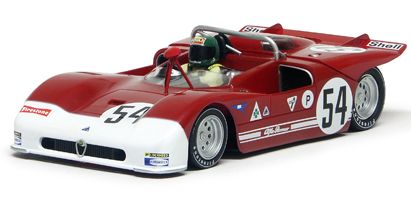
CA11c, Alfa Romeo 33/3 - #54 1st 1000 Km Brands Hatch 1971
Drivers: H.Pescarolo - A.De Adamich

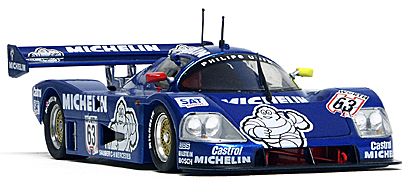
CA06e, Mercedes Sauber C9 - #63 3rd Supercup Nuerburgring Sept. 1987
Driver: Mike Thackwell


CA11c, Alfa Romeo 33/3 - #54 1st 1000 Km Brands Hatch 1971
Drivers: H.Pescarolo - A.De Adamich
CA06e, Mercedes Sauber C9 - #63 3rd Supercup Nuerburgring Sept. 1987
Driver: Mike Thackwell

Subscribe to:
Posts (Atom)